You will not be turning this in. On a piece of scrap paper write down why you are taking Psychology. Now look around the room and write down why you think others in the room are taking them.
Circle: Not including yourself, why do you think students take are taking this class? Activity: Fundamental Attribution Error- One person from you table go get a textbook and look up the Fundamental Attribution Error and make sure everyone at your table understands what it is and come up with an example that you would use to explain it to your parents if they asked you what you did in AP Psych today. Be prepared to share out.
Learning Target: To understand the major psychological perspectives and what they can tell us about ourselves and others.
Circle: Close your eyes and try and imagine yourself as an old person. What do you think the hardest part of being old is going to be?
Perspective Activity: At your table come up with a working definition of perspective.
You will not be turning this in. On a piece of scrap paper write down why you are taking Psychology. Now look around the room and write down why you think others in the room are taking them.
Circle: Not including yourself, why do you think students take are taking this class? Activity: Fundamental Attribution Error- One person from you table go get a textbook and look up the Fundamental Attribution Error and make sure everyone at your table understands what it is and come up with an example that you would use to explain it to your parents if they asked you what you did in AP Psych today. Be prepared to share out.
Learning Target: To understand the major psychological perspectives and what they can tell us about ourselves and others.
Circle: Close your eyes and try and imagine yourself as an old person. What do you think the hardest part of being old is going to be?
Perspective Activity: At your table come up with a working definition of perspective.
Learning Target: I can help build a community in the classroom and understand its importance in relation to learning.
Groupings Chart
Activity:
Introduce yourself to the group: Take notes on the people in your group.
1. Name a job you wanted to do when you were little
2. Favorite cartoon
3. One place you'd like to visit.
You will be reporting out your fellow group members. You might want to write it down.
Why would I assign you to a group? Make T-Chart with pros and cons
Rock Paper Scissors to see who presents Activity:
You will not be turning this in. On a piece of scrap paper write down why you are taking Psychology. Now look around the room and write down why you think others in the room are taking them. Circle Explanation: Restorative Justice
Circle: Not including yourself, why do you think students take Psychology? Activity: Fundamental Attribution Error- One person from you table go get a textbook and look up the Fundamental Attribution Error and make sure everyone at your table understands what it is and come up with an example that you would use to explain it to your parents if they asked you what you did in AP Psych today. Be prepared to share out.
Learning Target: To understand the major psychological perspectives and what they can tell us about ourselves and others.
Psychology Definition: The scientific study of behavior and mental processes.
Circle: A bizarre behavior you have witnessed at this school.
Activity: Using the behavior we talked about in circle and your limited understanding of psychology, try and determine why said person engaged in behavior. Be ready to report out.
Fundamental Attribution Error
Perspective Activity: At your table come up with a working definition of perspective.
Learning Target: I can help build a community in the classroom and understand its importance in relation to learning.
Groupings Chart
Activity:
Introduce yourself to the group: Take notes on the people in your group.
1. Name a job you wanted to do when you were little
2. Favorite cartoon
3. One place you'd like to visit.
You will be reporting out your fellow group members. You might want to write it down.
Why would I assign you to a group? Make T-Chart with pros and cons
Rock Paper Scissors to see who presents Activity:
You will not be turning this in. On a piece of scrap paper write down why you are taking Psychology. Now look around the room and write down why you think others in the room are taking them. Circle Explanation: Restorative Justice
Circle: Not including yourself, why do you think students take Psychology? Activity: Fundamental Attribution Error- One person from you table go get a textbook and look up the Fundamental Attribution Error and make sure everyone at your table understands what it is and come up with an example that you would use to explain it to your parents if they asked you what you did in AP Psych today. Be prepared to share out.
Learning Target: To understand the major psychological perspectives and what they can tell us about ourselves and others.
Psychology Definition: The scientific study of behavior and mental processes.
Circle: A bizarre behavior you have witnessed at this school.
Activity: Using the behavior we talked about in circle and your limited understanding of psychology, try and determine why said person engaged in behavior. Be ready to report out.
Fundamental Attribution Error
Perspective Activity: At your table come up with a working definition of perspective.
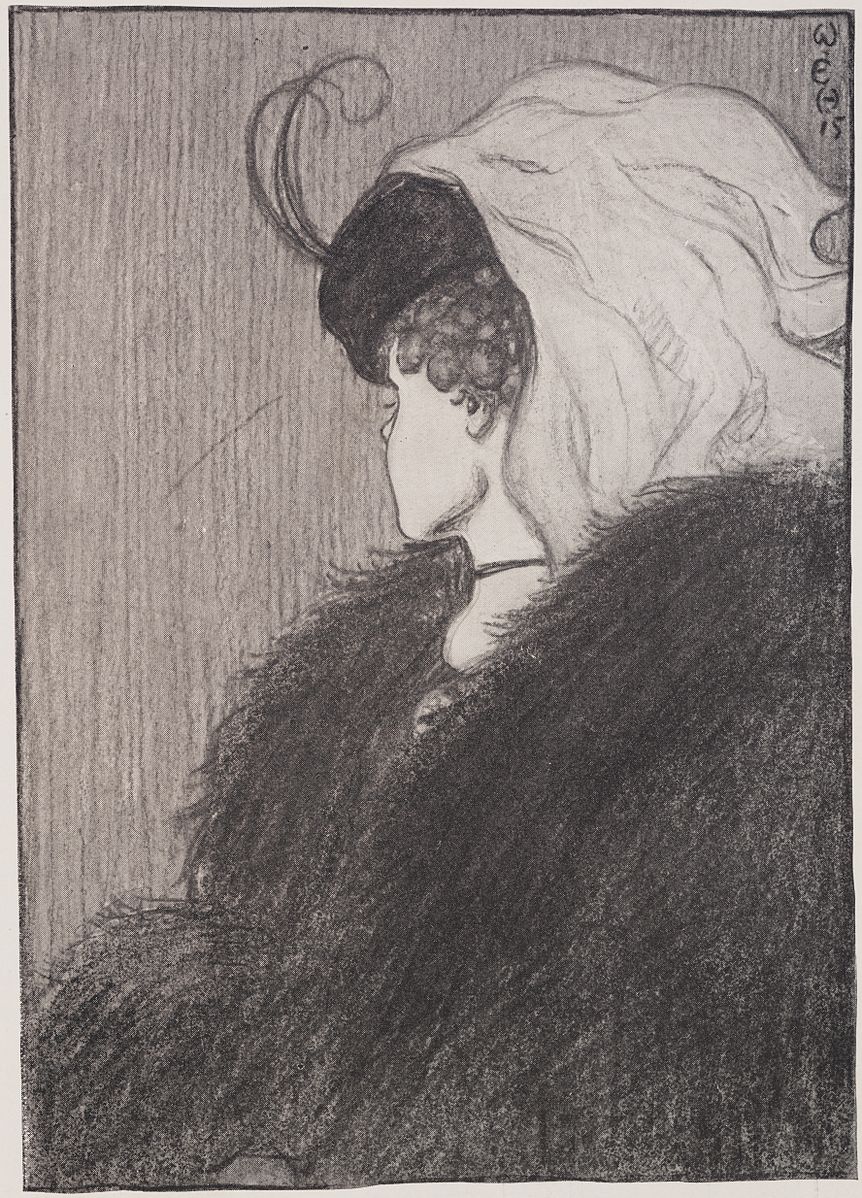
What do you see?
What did I just do to influence what you saw? Turn and talk
Circle: You have secret benefactor and you have been told they will buy you any car in the world, what would you buy?
New Seating Chart and Activity: 2 truths and a lie.
One Pager: At this point you should be working on one of three things. If you haven't finished the One Pager you need to complete that. If you are choosing the presentation option, you should be creating an outline of the presentation and practicing it. If you are choosing not to present you need to be working on your paper that will be written using the information from the packet you completed in class last week.
Circle: Do you think you know someone who might be a sociopath?
Disorder Project. This is graded each day so attendance is very important. You will be filling out the handout given in class. With the information gathered over the next few class periods you will become an "Expert" on a given disorder. You will be handing in the completed packet along with a "One-Pager" that will serve as the basis for a short presentation, or paper- your choice that will be part of the final grade.
Activity- If you had to go on a road trip with the people in your group, who would drive, who would give directions, who would make it fun and who would complain the most?
Introduction to Dissociative, Schizophrenia and Personality Disorders
Activity: Dissasociation
Activity: Referential Thinking Scale
Activity: Are you a sociopath? Anti-Social Personality Forum Online Test
Activity: Look up rates of depression; In America Worldwide In Maine In Men In Women In Teenagers What are the most prevalent forms of depression? What are the rarest forms of depression?
You will record the answers for each person in their group:
What is one goal you have after high school?
What is one activity you enjoy outside of school?
What is one strength you bring to a group?
What is one thing most people would not guess about you?
Circle: Something that makes you anxious? Doesn't have to be a big deal. Like jumping from high places into water makes me really anxious.
At your table Write down when you think something that makes you anxious crosses over into a psychological disorder.
Introduction to Anxiety and Mood Disorders: With your group come up with as many anxiety and mood disorders as you can. What is something you think they all have in common?
Circle: Something that makes you anxious? Doesn't have to be a big deal. Like jumping from high places into water makes me really anxious.
At your table Write down when you think something that makes you anxious crosses over into a psychological disorder.
Introduction to Anxiety and Mood Disorders: With your group come up with as many anxiety and mood disorders as you can. What is something you think they all have in common?
Stress and Memory 10:56 Mark 3 Takeaways What are the long term implications for your health, career, relationships etc. What did you learn about yourself and what you need to understand?
Whats next...Health!
Thursday, March 19, 2026
Thursday March 19, 2026
Circle: What do you do when you feel stressed out? How well does it work?
Stress and Memory 10:56 Mark What are the long term implications for your health, career, relationships etc. What did you learn about yourself and what you need to understand?
Stress and Memory 10:56 Mark What are the long term implications for your health, career, relationships etc. What did you learn about yourself and what you need to understand?
Activity:Karen Clips. Step 1. Write down three words to describe this person. Step 2. Share out what we think. Step 3. What do we think might be behind their behavior when we slow down and examine the situation, even if we might not know for sure. Step 4. How does our attitude change about these people as we slow down and think about why they might be acting this way. Do you feel the same as you did at Step 1? What changed?
Circle: What percentage chance to you give the possibility that you will make a new friend as a result of this class?
New Seating Chart/Activity: Photo Sharing: Ask everyone to share a picture on their phone from the last week and explain why it was taken. Who had the most interesting/funny picture?
Review: Fundamental Attribution Error- At your table come up with a simple explanation that you understand. Come up with an example that you can all agree on.
Simply put: We assume people act a certain way because of who they are, rather than because of the situation they’re in.
Lets look at our data... Does anything stand out to you?
Social Relations: Evaluate why we are attracted to some and not others. Why do we help others.
New Activity: Why do you think we like some people and not others. How quickly can you tell if you like someone, and have you ever been wrong- meaning you thought you didn't like someone and ended up being close or thought you liked someone and then realized they were not good for you and dropped them. What was it?
Circle: Have you ever gotten away with something that you should have gotten in trouble for? How did it make you feel?
Activity: Deindividuation-If you could do anything humanly possible with complete assurance that you would not be detected or held responsible for what would you do? Write it down.
Deindividuation is a psychological state where individuals in a group or crowd lose their self-awareness, personal identity, and sense of individual responsibility.
aggression, charity, academic dishonesty, crime, escapism, political activities, sexual behavior, social disruption, interpersonal spying, and eavesdropping, travel, and a catch-all other.
Criminal 26%
Sexual 11%
Spying 11%
Most common...robbing a bank at 15%
36% in total were considered anti-social.
Demonstration Activity: Blank piece of paper, write down how much time went by. Then again, how much time went by. Written variations will have a much greater variation in time then spoken times. Why?
Survey Time...How many students and teachers fall prey to the Fundamental Attribution Error
Circle: If your parents could see all of you social media would they be happy, sad or mad?
Social-Cultural Perspective- What is it? Describe a time when you had to act different because of the situation you were in. How did it feel? Did you notice that you were acting differently than how you usually do? Did it feel fake? Now remember a time when you didn't know how to act, what did you do to figure it out?
Fundamental Attribution Error- We assume people act a certain way because of who they are, rather than because of the situation they are in.
New Seating Chart- Interview everyone at your new table and determine who had the best snow day and the worst snow day? Two different people must present the best and worst but you cannot present your own. It must include specific details about why it was so bad or good.
Circle: Your favorite pair of shoes?
Activity: Getting ready for the hand. Take out your hand mnemonic. You will be assessed over the major psychological perspectives. For the assessment you will be getting a blank hand which you will fill out with each of the perspectives and a simple definition. You will then be asked to explain how each perspective would explain the behavior in the scenario. To study you will be creating note-cards which have all of the following.
Front of card: Perspective
Back of card: 1. Simple definition of perspective 2. Example of perspective. 3. Personal connection to the perspective: Evolutionary Example- I know that when I get married, if female, I will most likely marry someone who is older than me because evolutionary psychology says they will be more capable of caring for our child because they will be more mature and stable so my child will have better chance of surviving to adulthood and having children of their own.
These cards are worth 10 percent of the grade. They must be passed in when we take the test.
Circle: How many pets do your family currently have?
Get into groups: Name that tune for candy! Two rounds. Top pop hits and Top country hits.
Two new notecards: 1. Psychology- The study of people's behavior and mental processes, anotherwords, what people do and why they do it. 2. Bio-psych-social Model: Mental illness is influence by your biology, the way you think about things, and the situation you are in.
Take out the HAND- What does each finger represent and why?
Notecards- How many are completed? 5 minutes to get any last ones done.
Hand out scenario- In your own words, what do you think might be wrong. Jot down you ideas on the back of scenario.
Now using the Hand and note cards, how would you fit your ideas under the different perspectives. You don't need to put one under each one.
Humanistic, Behavioral, Cognitive, Psychoanalytic, Social-Cultural, Evolutionary and Biological
Be prepared to share out as a group what you think is going on with Alex and which perspectives make the most sense explaining is behavior and thinking.
Circle: What is you favorite thing to do outside when the weather is nice?
What would it take you to murder someone you didn't know and who was no threat to you? Do you think you would murder someone just because you were told to do so?
What do you think is wrong with someone who murders innocent people? Are they mentally ill?
How do you explain what the Nazi's did to the Jews? How could normal people do that?
Circle: If you had to choose between being really successful but not having any really close friends or being ok in terms of success but have really close friends which would you choose?
Circle: If you had to choose one breakfast cereal for the rest of your life, which would you choose?
Revisit: Definition of Psychology- The study of behavior AND mental processess.
1. The Hand- What do we understand about the Evolutionary Perspective? Why do people engage in behavior(like saving the 5 year-old) and what is behind the decision/mental process?
Seating Chart Activity:After you find you seat figure out three things you have in common with your table-mates. You will be sharing this with the class.
Circle: Ocean or the lake?
Revisit: Definition of Psychology- The study of behavior AND mental processess.
Circle: What's an annoying habit that someone you live with has?
Activity: Write down one thing you learned about yourself as a result of taking the Myers-Briggs Profile and one thing you learned about other people in this class?
Activity: Your brain in a prediction machine and since it is a machine I and others can know things about you that you don't even know. Weird, I know.
Evolutionary Psychology: Please answer the following questions on the handout. How could I know?
Learning Target: I can help build a community in the classroom and understand its importance in relation to learning.
Circle: Name and what is ONE pet peeve of yours?
Psychology Definition: The scientific study of behavior and mental processes.
Your brain is a prediction machine...
Lets look at mental processess? Using your Myers-Briggs profile look at that profile that is the opposite of yours and be ready to discuss how different that world would be for you. What seems like it would blow your mind? Find someone who is opposite from you or as close to opposite as you can find. Go thru questionaire together and answer the questions. Compare answers to see how diferrently you interact with the world and the people around you.
Understand... At your table-Fundamental Attribution Error
Perspective Activity: At your table come up with a working definition of perspective.
Old People- How much different do you think you'll be when you are 70 years old? When you talk to old people, do you feel like they are happy or sad? What is one of your biggest concerns about growing old and gray? What do you think you'll look like when you are old. Imagine what you think you'll look like.
Activity: Fundamental Attribution Error- Open your computer and look up the Fundamental Attribution
Error and make sure everyone at your table understands what it is and come up with an example that you would use to explain it to your parents if they asked you what you did in Psych today. Be prepared to share out.
Learning Target: To understand the major psychological perspectives and what they can tell us about ourselves and others.
Psychology Definition: The scientific study of behavior and mental processes.
Perspective Activity: At your table come up with a working definition of perspective.
At your table: Why do you think old people get so frustrated with kids today? I want you to think of someone old you know and share some of the things they say about kids your age?
At your table: I want you to picture yourself as an old person. What do you think you will be like?
What do you see?
What did I just do to influence what you saw? Turn and talk
Circle: Either the grossest thing you have seen served in school cafeteria or your favorite cafe item.
Learning Target: I can help build a community in the classroom and understand its importance in relation to learning.
Activity: Fundamental Attribution Error- Open your computer and look up the Fundamental Attribution
Error and make sure everyone at your table understands what it is and come up with an example that you would use to explain it to your parents if they asked you what you did in Psych today. Be prepared to share out.
Learning Target: To understand the major psychological perspectives and what they can tell us about ourselves and others.
Psychology Definition: The scientific study of behavior and mental processes.
Perspective Activity: At your table come up with a working definition of perspective.
At your table: Why do you think old people get so frustrated with kids today? I want you to think of someone old you know and share some of the things they say about kids your age?
At your table: I want you to picture yourself as an old person. What do you think you will be like?
What do you see?
What did I just do to influence what you saw? Turn and talk
Learning Target: I can help build a community in the classroom and understand its importance in relation to learning.
Groupings Chart
Activity:
Introduce yourself to the group: Take notes on the people in your group.
1. Name a job you wanted to do when you were little
2. Favorite cartoon
3. One place you'd like to visit.
You will be reporting out your fellow group members. You might want to write it down.
Why would I assign you to a group? Make T-Chart with pros and cons
Rock Paper Scissors to see who presents Activity:
You will not be turning this in. On a piece of scrap paper write down why you are taking Psycholgy. Now look around the room and write down why you think others in the room are taking them. Circle Explanation: Restorative Justice
Circle: Not including yourself, why do you think students take Psychology? Activity: Fundamental Attribution Error- One person from you table go get a textbook and look up the Fundamental Attribution Error and make sure everyone at your table understands what it is and come up with an example that you would use to explain it to your parents if they asked you what you did in AP Psych today. Be prepared to share out.
Learning Target: To understand the major psychological perspectives and what they can tell us about ourselves and others.
Psychology Definition: The scientific study of behavior and mental processes.
Circle: A bizarre behavior you have witnessed at this school.
Activity: Using the behavior we talked about in circle and your limited understanding of psychology, try and determine why said person engaged in behavior. Be ready to report out.
Fundamental Attribution Error
Perspective Activity: At your table come up with a working definition of perspective.
What do you see?
What did I just do to influence what you saw? Turn and talk